Sovereign AI and Digital Independence: A Framework for National AI Self-Determination
A Policy Whitepaper by Hu-GPT, LLC
June 2025
Executive Summary
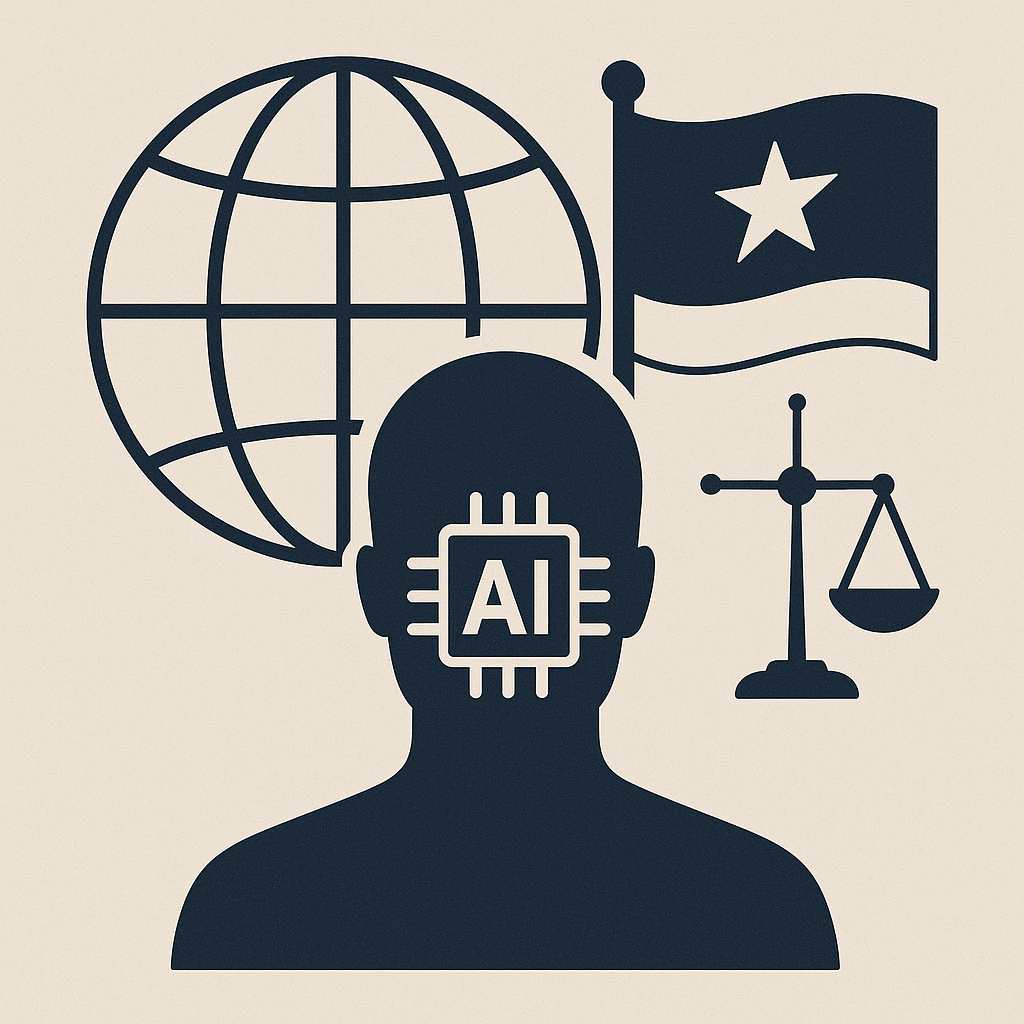
As artificial intelligence becomes the defining technology of the 21st century, nations worldwide grapple with a fundamental question: How can they harness AI’s transformative power while maintaining control over their digital destiny? The concept of “Sovereign AI” the ability of nations to develop, deploy, and govern AI systems according to their own values, security requirements, and strategic interests has emerged as a critical policy imperative.
This whitepaper presents a comprehensive framework for national AI self-determination that balances the need for technological sovereignty with the benefits of international cooperation. We examine the tensions between AI independence and global governance, propose actionable policy recommendations, and outline Hu-GPT’s strategic commitment to advancing sovereign AI capabilities particularly for tribal nations and democratic societies.
Key Findings:
- Digital sovereignty in AI requires control over four critical layers: data, algorithms, hardware, and governance
- Nations can achieve AI independence while maintaining beneficial international partnerships through strategic cooperation frameworks
- Tribal nations and indigenous communities represent a unique case study in AI sovereignty that offers lessons for broader national strategies
- Human-in-the-loop AI systems provide a pathway to maintain democratic values while achieving technological advancement
Policy Recommendations:
- Establish national AI sovereignty frameworks that prioritize democratic values and human oversight
- Create international cooperation mechanisms that respect national sovereignty while enabling beneficial collaboration
- Develop domestic AI capabilities through strategic public-private partnerships
- Implement robust cybersecurity measures to protect sovereign AI systems from foreign interference
- Ensure equitable access to sovereign AI benefits across all communities, including tribal and rural populations
Introduction: The AI Sovereignty Imperative
The race for artificial intelligence supremacy is fundamentally reshaping global power dynamics. Unlike previous technological revolutions, AI development is concentrated among a small number of nations and corporations, creating unprecedented dependencies and vulnerabilities. For democratic nations and their constituent communities including tribal nations with unique sovereignty rights the challenge is twofold: how to participate in the AI revolution without compromising fundamental values, security, or self-determination.
The stakes could not be higher. Nations that fail to achieve meaningful AI sovereignty risk becoming digital colonies, dependent on foreign AI systems for critical functions ranging from national defense to economic planning. Conversely, nations that pursue complete AI isolationism may find themselves technologically outpaced and economically disadvantaged.
This whitepaper argues for a “third way” a framework that enables nations to achieve genuine AI sovereignty while maintaining the benefits of international cooperation and technological exchange. Drawing from Hu-GPT’s experience in developing secure, human-centered AI systems for government and tribal clients, we present actionable strategies for building sovereign AI capabilities that serve national interests while preserving democratic values.
The Current AI Landscape: Concentration and Dependency
Today’s AI ecosystem is characterized by extreme concentration. A handful of companies primarily based in the United States and China control the majority of advanced AI research, development, and deployment capabilities. This concentration creates several risks:
Strategic Dependencies: Nations become reliant on foreign AI systems for critical infrastructure, creating potential points of coercion or disruption.
Value Misalignment: AI systems developed by foreign entities may embed values, assumptions, or biases that conflict with national priorities or cultural norms.
Data Sovereignty Risks: AI training requires vast datasets, often collected from national populations but controlled by foreign entities.
Security Vulnerabilities: Foreign-controlled AI systems may contain backdoors, surveillance capabilities, or other security compromises.
The Democratic Imperative
For democratic nations, AI sovereignty is not merely about technological independence it’s about preserving democratic governance itself. AI systems increasingly influence critical decisions affecting citizens’ lives, from healthcare allocation to criminal justice outcomes. When these systems are controlled by foreign entities or operate as “black boxes” without transparency, democratic accountability becomes impossible.
Hu-GPT’s approach to AI development emphasizing human-in-the-loop design, transparency, and democratic oversight offers a model for how sovereign AI can strengthen rather than undermine democratic institutions.
Defining Sovereign AI: A Four-Layer Framework
True AI sovereignty requires control and capability across four interconnected layers. Nations must address each layer strategically to achieve genuine AI self-determination.
Layer 1: Data Sovereignty
Definition: The ability to control, govern, and protect the data used to train and operate AI systems.
Key Components:
- Data Residency: Ensuring critical datasets remain within national borders or allied nations
- Data Governance: Establishing clear rules for data collection, use, and sharing
- Privacy Protection: Implementing robust privacy safeguards that reflect national values
- Cultural Data Protection: Special protections for culturally sensitive information, particularly relevant for tribal nations
Hu-GPT’s Approach: Our identity verification systems are designed with data minimization principles, collecting only necessary information and providing granular control over data residency and governance. For tribal clients, we implement specific protections for culturally sensitive biometric and identity data.
Layer 2: Algorithmic Sovereignty
Definition: The capability to develop, understand, modify, and control the algorithms that power AI systems.
Key Components:
- Domestic AI Research: Building national capacity for AI algorithm development
- Algorithmic Transparency: Ensuring AI systems can be audited and understood by national authorities
- Bias Detection and Mitigation: Developing capabilities to identify and address algorithmic bias
- Value Alignment: Ensuring AI systems reflect national values and priorities
Hu-GPT’s Contribution: Our proprietary pattern-matching algorithms and deepfake detection technologies exemplify sovereign AI development created domestically, transparent to authorized users, and aligned with democratic values of security and human oversight.
Layer 3: Hardware Independence
Definition: Reducing dependencies on foreign-controlled hardware for critical AI operations.
Key Components:
- Semiconductor Strategy: Developing domestic or allied semiconductor capabilities
- Computing Infrastructure: Building sovereign cloud and edge computing capabilities
- Supply Chain Security: Ensuring hardware components are free from foreign compromise
- Critical System Isolation: Maintaining air-gapped systems for the most sensitive AI applications
Strategic Considerations: While complete hardware independence may be impractical for most nations, strategic partnerships with trusted allies can provide security benefits while maintaining reasonable costs and capabilities.
Layer 4: Governance Sovereignty
Definition: The authority to establish and enforce rules governing AI development, deployment, and use within national borders.
Key Components:
- Regulatory Frameworks: Developing comprehensive AI governance legislation
- Standards Setting: Establishing national AI standards that reflect democratic values
- International Coordination: Participating in global AI governance while preserving national autonomy
- Democratic Oversight: Ensuring AI systems remain subject to democratic accountability
Hu-GPT’s Vision: We advocate for governance frameworks that mandate human oversight of AI systems, particularly for high-stakes applications like identity verification and security screening.
The Global Landscape of AI Self-Determination
Understanding how different nations approach AI sovereignty provides valuable insights for developing effective strategies.
The American Approach: Innovation with Security
The United States has pursued AI leadership through a combination of private sector innovation and strategic government investment. Key initiatives include:
- National AI Initiative: Coordinating federal AI research and development
- NIST AI Risk Management Framework: Establishing voluntary standards for AI safety and security
- Export Controls: Restricting AI technology transfers to strategic competitors
- Government AI Adoption: Federal agencies increasingly deploying AI while maintaining human oversight
Strengths: Strong innovation ecosystem, robust private sector capabilities, democratic oversight mechanisms.
Challenges: Heavy reliance on private sector, potential gaps in critical areas like semiconductor manufacturing, varying levels of government AI expertise.
The Chinese Model: State-Directed Development
China has adopted a state-directed approach to AI development, with significant government investment and coordination:
- National AI Strategy: Centralized planning for AI development across sectors
- Data Advantages: Leveraging large population and fewer privacy restrictions for AI training
- Integration Across Sectors: Coordinated AI deployment in government, business, and social systems
- International Technology Transfer: Strategic acquisition of foreign AI capabilities
Strengths: Coordinated national strategy, significant resources, rapid deployment capabilities.
Challenges: Centralized control may limit innovation, privacy and human rights concerns, international backlash against perceived AI imperialism.
The European Framework: Rights-Based Governance
The European Union has emphasized AI governance and rights protection:
- AI Act: Comprehensive legislation regulating AI development and deployment
- GDPR Integration: Extending privacy rights to AI systems
- Digital Sovereignty Strategy: Reducing dependence on foreign digital services
- Ethical AI Guidelines: Promoting human-centric AI development
Strengths: Strong governance framework, protection of individual rights, international leadership in AI ethics.
Challenges: Potential innovation constraints, fragmented implementation across member states, dependence on foreign AI capabilities.
Emerging National Strategies
Smaller nations and regions are developing innovative approaches to AI sovereignty:
- Singapore: Smart nation initiative with strong public-private partnerships
- Canada: Focus on AI research excellence and ethical leadership
- Israel: Leveraging cybersecurity expertise for AI applications
- Nordic Countries: Emphasizing transparency and democratic AI governance
Lessons for AI Sovereignty
Several key lessons emerge from this global landscape:
- No Single Model: Different approaches reflect different national strengths, values, and circumstances
- Innovation-Security Balance: All successful strategies balance innovation promotion with security protection
- International Cooperation: Even sovereignty-focused strategies involve significant international partnerships
- Democratic Values: Nations that maintain democratic oversight tend to develop more trustworthy AI systems
Balancing Independence and Cooperation
The tension between AI independence and international cooperation represents one of the most complex challenges in AI sovereignty. Complete isolation risks technological stagnation, while excessive dependence creates security vulnerabilities.
The Case for AI Cooperation
International cooperation in AI development offers several benefits:
Accelerated Innovation: Shared research and development can accelerate breakthrough discoveries that benefit all participants.
Cost Efficiency: Collaborative projects can spread development costs across multiple nations, making advanced AI capabilities more accessible.
Standard Setting: International cooperation facilitates the development of common standards and protocols that enable interoperability.
Risk Mitigation: Shared governance frameworks can help address global AI risks like autonomous weapons or uncontrolled artificial general intelligence.
Knowledge Exchange: Academic and research partnerships enable the free flow of ideas and expertise.
The Risks of AI Dependence
However, excessive reliance on international AI systems creates significant risks:
Strategic Vulnerability: Dependence on foreign AI systems creates potential points of coercion or disruption during conflicts.
Value Imposition: Foreign AI systems may embed values or assumptions that conflict with national priorities or democratic principles.
Economic Exploitation: AI dependencies can become mechanisms for economic extraction, with dependent nations paying premium prices for essential capabilities.
Technological Lock-in: Adopting foreign AI standards may make it difficult to develop domestic alternatives or switch to different systems.
Security Compromises: Foreign-controlled AI systems may contain surveillance capabilities, backdoors, or other security vulnerabilities.
A Framework for Strategic Cooperation
Nations can realize the benefits of AI cooperation while maintaining sovereignty through carefully structured partnerships:
Tiered Cooperation Model
Open Cooperation: Basic research, academic exchanges, and non-sensitive applications where full openness poses minimal risk.
Allied Cooperation: Deeper collaboration with trusted democratic partners on more sensitive applications, including shared development of critical AI capabilities.
Controlled Cooperation: Limited, carefully monitored collaboration with strategic competitors in areas of mutual interest, such as AI safety research.
Sovereign Protection: Maintaining complete domestic control over the most critical AI applications, including national security, critical infrastructure, and sensitive government functions.
Reciprocity and Transparency Requirements
Effective AI cooperation requires reciprocity and transparency:
- Mutual Access: Partnership agreements should ensure comparable access to AI capabilities and research
- Transparency Standards: Cooperative AI systems should meet agreed-upon transparency and auditability requirements
- Value Alignment: Partnerships should be limited to nations that share fundamental democratic values and commitments to human rights
- Exit Strategies: Cooperation agreements should include mechanisms for withdrawal if partnerships become compromised
Hu-GPT’s Cooperative Approach
Hu-GPT exemplifies how companies can pursue international cooperation while maintaining sovereign capabilities:
Open Source Contributions: We contribute to open source AI research in non-sensitive areas, fostering global innovation while maintaining proprietary advantages in critical security applications.
Allied Partnerships: Our focus on democratic allies including tribal nations with sovereignty rights demonstrates how cooperation can strengthen rather than compromise sovereignty.
Transparency by Design: Our human-in-the-loop AI systems enable cooperation by providing transparency and auditability that partners can trust.
Sovereign Deployment: We design our systems to operate within customer sovereignty frameworks, ensuring that nations and tribal governments maintain control over their AI capabilities.
Case Study: Tribal AI Sovereignty as a Model
Tribal nations within the United States provide a unique and instructive case study for AI sovereignty. With inherent sovereignty rights, distinct cultural values, and specific security needs, tribal nations must navigate AI adoption while preserving their self-determination and cultural integrity.
The Tribal Sovereignty Context
Tribal nations possess unique sovereignty characteristics that parallel national AI sovereignty challenges:
Legal Sovereignty: Federally recognized tribes have government-to-government relationships with the United States, including rights to self-governance and self-determination.
Cultural Sovereignty: Tribes have distinct cultural values, languages, and traditions that must be preserved and protected in any AI implementation.
Data Sovereignty: Tribal nations have particular concerns about the collection, use, and protection of data about tribal members and cultural practices.
Economic Sovereignty: Many tribes depend on gaming revenue and other economic activities that require sophisticated technology while maintaining independence from external control.
AI Challenges for Tribal Nations
Tribal nations face several unique challenges in AI adoption:
Scale Limitations: Most tribal nations lack the resources to develop comprehensive AI capabilities independently.
Cultural Sensitivity: Standard AI systems may not understand or respect tribal cultural values, languages, or practices.
Data Protection: Tribal nations require especially strong protections for culturally sensitive information and biometric data.
Cybersecurity Threats: As Hu-GPT’s tribal gaming research demonstrates, tribal operations face sophisticated cyber threats, including ransomware and deepfake fraud.
Vendor Relations: Many technology vendors lack understanding of tribal sovereignty and may not provide appropriate governance structures.
Hu-GPT’s Tribal AI Sovereignty Framework
Through our work with tribal gaming operations and engagement with tribal policy makers, Hu-GPT has developed a framework for tribal AI sovereignty that offers lessons for broader national strategies:
Cultural Alignment
Language Preservation: AI systems should support and preserve tribal languages rather than undermining them through English-only interfaces.
Value Integration: AI decision-making processes should incorporate tribal values and consultation practices, not override them.
Sacred Data Protection: Certain types of information including some biometric and cultural data require special protections that go beyond standard privacy measures.
Governance Integration
Tribal Oversight: AI systems operating in tribal contexts should be subject to tribal government oversight and regulation, not just federal or state authority.
Consent Mechanisms: Data collection and AI deployment should follow tribal consent processes, which may differ from standard commercial practices.
Sovereignty Respect: Technology vendors should recognize and work within tribal sovereignty frameworks rather than treating tribes as mere customers.
Technical Sovereignty
On-Premise Deployment: Critical AI systems should be deployable within tribal-controlled infrastructure to maintain data sovereignty.
Audit Capabilities: Tribal governments should have the ability to audit and understand AI systems operating within their jurisdiction.
Exit Rights: Tribes should maintain the ability to discontinue AI systems and recover their data if vendor relationships become unsatisfactory.
Economic Benefits
Revenue Protection: AI systems should enhance rather than undermine tribal economic activities, particularly gaming operations that fund essential tribal services.
Workforce Development: AI implementation should include training and capacity building for tribal members.
Partnership Equity: Technology partnerships should provide fair economic terms that recognize tribal sovereignty and avoid exploitative relationships.
Lessons for National AI Sovereignty
The tribal AI sovereignty experience offers several insights for broader national strategies:
Sovereignty is Contextual: Different nations and communities have different sovereignty requirements that must be understood and respected.
Culture Matters: AI systems that ignore cultural values and practices will ultimately fail to serve their intended communities effectively.
Partnership Models: Successful AI sovereignty often involves partnerships rather than complete independence, but these partnerships must be structured to respect sovereignty rights.
Security Integration: Cybersecurity and AI security must be integrated from the beginning, not added as an afterthought.
Democratic Oversight: Even sophisticated AI systems must remain subject to democratic oversight and community accountability.
Cybersecurity and AI Protection
AI sovereignty is meaningless without robust cybersecurity. Sovereign AI systems face unique threats that require comprehensive protection strategies.
AI-Specific Cybersecurity Threats
Model Poisoning: Attackers can compromise AI training data to manipulate system behavior in subtle but significant ways.
Adversarial Attacks: Carefully crafted inputs can fool AI systems into making incorrect decisions, potentially with catastrophic consequences.
Model Theft: Sophisticated AI models represent significant intellectual property that adversaries may attempt to steal or reverse-engineer.
Deepfake and Synthetic Media: AI-generated fake content can be used to manipulate public opinion, commit fraud, or undermine trust in legitimate information.
Supply Chain Compromises: AI development relies on complex supply chains that can be compromised at multiple points.
Hu-GPT’s Cybersecurity Approach
Drawing from our experience protecting tribal gaming operations and federal government systems, Hu-GPT has developed comprehensive cybersecurity strategies for AI protection:
Detection and Prevention
Advanced Threat Detection: Our systems use behavioral analysis and pattern recognition to identify sophisticated attacks, including those using AI-generated content.
Deepfake Detection: Our core competency in deepfake detection provides protection against AI-powered fraud attempts targeting sovereign systems.
Zero-Trust Architecture: All Hu-GPT systems are designed with zero-trust principles, assuming that any component may be compromised and requiring continuous verification.
Human-in-the-Loop Security
Human Oversight: Critical AI decisions are always subject to human review, providing a backstop against automated attacks or system compromises.
Behavioral Monitoring: Our systems monitor for unusual patterns that may indicate system compromise or manipulation.
Democratic Accountability: Security measures are designed to be transparent to appropriate oversight authorities while maintaining operational security.
Resilience and Recovery
Immutable Audit Trails: All system activities are recorded in blockchain-anchored audit trails that cannot be altered by attackers.
Rapid Recovery: Systems are designed for quick recovery from attacks with minimal data loss or operational disruption.
Continuous Learning: Security systems continuously adapt to new threats while maintaining performance and reliability.
National Cybersecurity Implications
Effective AI sovereignty requires national cybersecurity strategies that address AI-specific threats:
Regulatory Frameworks: Nations need comprehensive regulations addressing AI security requirements for critical systems.
Public-Private Partnerships: Government and industry must collaborate to address AI threats that affect national security and economic stability.
International Cooperation: Cyber threats cross borders, requiring international cooperation even among nations pursuing AI sovereignty.
Workforce Development: Nations need cybersecurity professionals who understand both traditional threats and AI-specific vulnerabilities.
Hu-GPT’s Policy Framework and Forward Strategy
Based on our experience developing secure AI systems for government and tribal clients, Hu-GPT proposes a comprehensive policy framework for advancing AI sovereignty while maintaining democratic values and international cooperation.
Core Policy Principles
Democratic AI Governance
Principle: AI systems, particularly those used by government or in critical infrastructure, must remain subject to democratic oversight and accountability.
Implementation:
- Mandatory human oversight for high-stakes AI decisions
- Transparency requirements for government AI systems
- Public participation in AI policy development
- Regular audits of AI system performance and bias
Hu-GPT’s Commitment: All our government systems include human-in-the-loop design and provide audit capabilities for democratic oversight.
Human-Centered AI Development
Principle: AI systems should augment human capabilities rather than replace human judgment, particularly in sensitive applications.
Implementation:
- Design requirements for human oversight in critical applications
- Training programs to help humans work effectively with AI systems
- Accessibility requirements ensuring AI benefits reach all communities
- Protection of human agency and decision-making authority
Hu-GPT’s Approach: Our identity verification systems enhance human decision-making rather than replacing it, providing analysis and recommendations that trained personnel can evaluate and act upon.
Sovereign Technology Development
Principle: Nations should maintain control over critical AI capabilities while participating in beneficial international cooperation.
Implementation:
- Strategic investment in domestic AI research and development
- Public-private partnerships that maintain public oversight
- International cooperation frameworks that respect sovereignty
- Protection of critical AI intellectual property and capabilities
Hu-GPT’s Strategy: We develop proprietary AI capabilities within the United States while offering partnership opportunities to allied nations and tribal governments.
Inclusive AI Benefits
Principle: The benefits of AI development should be shared equitably across all communities, including rural and tribal populations.
Implementation:
- Universal access requirements for government AI services
- Cultural competency requirements for AI systems serving diverse populations
- Economic development programs that help communities participate in the AI economy
- Protection against AI-enabled discrimination or bias
Hu-GPT’s Mission: Our work with tribal nations demonstrates our commitment to ensuring AI benefits reach underserved communities while respecting their sovereignty and cultural values.
Policy Recommendations
Domestic AI Capability Development
Recommendation 1: National AI Sovereignty Initiative
Congress should establish a National AI Sovereignty Initiative that coordinates federal investment in critical AI capabilities while maintaining democratic oversight and values.
Key Components:
- Dedicated funding for sovereign AI research and development
- Public-private partnerships that maintain public control over critical capabilities
- Coordination mechanisms across federal agencies
- International cooperation frameworks with democratic allies
Hu-GPT’s Role: We stand ready to contribute our expertise in secure AI development and to partner with government agencies in developing sovereign AI capabilities.
Recommendation 2: AI Transparency and Accountability Standards
Federal agencies should adopt comprehensive transparency and accountability standards for AI systems used in government operations.
Key Components:
- Mandatory algorithmic impact assessments for government AI systems
- Public reporting requirements for AI system performance and bias
- Human oversight requirements for high-stakes decisions
- Audit capabilities for oversight authorities
Hu-GPT’s Contribution: Our systems are designed to meet and exceed these transparency requirements, providing audit trails and explanatory capabilities that enable democratic oversight.
International Cooperation and Security
Recommendation 3: Democratic AI Alliance
The United States should lead the formation of a Democratic AI Alliance that coordinates AI development among nations committed to democratic values and human rights.
Key Components:
- Shared research and development programs
- Common standards for AI transparency and accountability
- Coordinated responses to AI-enabled threats
- Technology transfer frameworks that maintain security
Hu-GPT’s Vision: We support international cooperation that strengthens democratic values and can contribute our expertise in secure, transparent AI development to alliance initiatives.
Recommendation 4: AI Security and Resilience Framework
The federal government should establish comprehensive security standards for AI systems used in critical infrastructure and national security applications.
Key Components:
- Mandatory security requirements for critical AI systems
- Threat intelligence sharing between government and private sector
- Incident response frameworks for AI-related security breaches
- Regular penetration testing and vulnerability assessments
Hu-GPT’s Expertise: Our experience in cybersecurity and AI protection positions us to help develop and implement these security frameworks.
Tribal and Community Sovereignty
Recommendation 5: Tribal AI Sovereignty Recognition
Federal policy should explicitly recognize tribal sovereignty in AI governance and provide resources for tribal nations to develop their own AI capabilities.
Key Components:
- Consultation requirements for AI policies affecting tribal lands
- Funding for tribal AI capacity building
- Recognition of tribal authority over AI systems operating in tribal jurisdiction
- Protection for culturally sensitive data and practices
Hu-GPT’s Commitment: We have demonstrated our commitment to tribal sovereignty through our work with tribal gaming operations and our engagement with tribal policy advocates. We will continue to support tribal AI sovereignty initiatives.
Hu-GPT’s Forward Strategy
Research and Development Priorities
Advanced Security Technologies
We will continue developing cutting-edge cybersecurity capabilities specifically designed for AI systems, including:
- Enhanced deepfake detection capabilities
- AI-powered threat analysis systems
- Quantum-resistant security protocols
- Behavioral biometric authentication systems
Human-AI Collaboration Systems
We will expand our research into systems that optimize human-AI collaboration, particularly for:
- Democratic decision-making processes
- Cultural preservation and language support
- Accessibility and inclusion applications
- Transparent and explainable AI systems
Partnership and Engagement Strategy
Government Partnerships
We will actively pursue partnerships with federal, state, and tribal governments to:
- Develop sovereign AI capabilities that serve public interests
- Provide expertise in AI security and transparency
- Support democratic oversight and accountability mechanisms
- Ensure AI benefits reach underserved communities
Academic Collaboration
We will partner with leading universities and research institutions to:
- Advance the science of human-centered AI
- Develop new approaches to AI transparency and explainability
- Train the next generation of AI researchers and practitioners
- Publish research that benefits the broader AI community
International Engagement
We will engage with democratic allies to:
- Share best practices in AI security and governance
- Develop common standards for AI transparency and accountability
- Support capacity building in partner nations
- Counter authoritarian uses of AI technology
Advocacy and Policy Engagement
Congressional Engagement
We will actively engage with Congress to:
- Provide technical expertise on AI policy issues
- Advocate for policies that support AI sovereignty while maintaining democratic values
- Support legislation that protects tribal sovereignty in AI governance
- Promote international cooperation frameworks that strengthen democratic alliances
Regulatory Participation
We will participate in regulatory processes to:
- Help develop technical standards for AI security and transparency
- Advocate for rules that enable innovation while protecting public interests
- Ensure tribal voices are included in AI governance discussions
- Promote inclusive approaches to AI development and deployment
Public Education
We will contribute to public understanding of AI issues through:
- Research publications on AI sovereignty and security
- Public speaking and conference participation
- Educational resources for policymakers and communities
- Media engagement on critical AI policy issues
Implementation Roadmap
Achieving meaningful AI sovereignty requires coordinated action across multiple time horizons. This roadmap outlines immediate, medium-term, and long-term priorities for implementing the framework outlined in this whitepaper.
Phase 1: Foundation Building (6-18 months)
Immediate Priorities
Policy Development
- Establish congressional task force on AI sovereignty
- Begin development of federal AI transparency standards
- Initiate consultation process with tribal nations on AI governance
- Launch Democratic AI Alliance discussions with key partners
Capability Assessment
- Conduct comprehensive audit of current federal AI capabilities and dependencies
- Assess critical infrastructure vulnerabilities to AI-enabled threats
- Evaluate domestic AI research and development capacity
- Identify strategic gaps in AI supply chains
Pilot Programs
- Launch pilot programs for transparent, accountable government AI systems
- Begin tribal AI sovereignty demonstration projects
- Establish AI security testing programs for critical infrastructure
- Create public-private partnerships for sovereign AI development
Hu-GPT’s Phase 1 Contributions
- Partner with federal agencies to develop secure identity verification systems
- Expand tribal gaming cybersecurity programs to include AI protection
- Contribute expertise to congressional AI sovereignty task force
- Begin international engagement with democratic partners on AI cooperation
Phase 2: Capacity Building (12-36 months)
Core Objectives
Domestic AI Capabilities
- Establish National AI Sovereignty Initiative with dedicated funding
- Launch comprehensive AI workforce development programs
- Build strategic partnerships between government, industry, and academia
- Develop domestic supply chains for critical AI hardware and software
International Cooperation
- Formalize Democratic AI Alliance with shared research and development programs
- Establish common standards for AI transparency and accountability
- Create frameworks for technology transfer that maintain security
- Coordinate responses to AI-enabled threats from authoritarian regimes
Regulatory Framework
- Implement comprehensive AI transparency and accountability standards
- Establish security requirements for critical AI systems
- Create oversight mechanisms for government AI deployment
- Recognize tribal sovereignty in AI governance frameworks
Hu-GPT’s Phase 2 Expansion
- Scale secure AI systems across federal agencies
- Develop new human-AI collaboration technologies for democratic governance
- Expand international partnerships with allied democratic nations
- Launch major research initiatives in AI security and transparency
Phase 3: Full Implementation (2-5 years)
Strategic Goals
Sovereign AI Ecosystem
- Achieve meaningful independence in critical AI capabilities
- Maintain technological leadership in key AI applications
- Establish robust domestic AI supply chains
- Create sustainable funding mechanisms for ongoing AI development
Democratic AI Governance
- Implement comprehensive oversight of government AI systems
- Ensure public participation in AI policy development
- Protect individual rights and democratic values in AI deployment
- Create accountability mechanisms for AI decision-making
Global Leadership
- Lead international efforts to govern AI development responsibly
- Counter authoritarian uses of AI technology
- Promote democratic values in global AI governance
- Maintain technological advantages while enabling beneficial cooperation
Hu-GPT’s Long-term Vision
- Become a leading provider of secure, transparent AI systems for democratic governments
- Establish Hu-GPT technologies as gold standard for AI accountability and human oversight
- Create sustainable model for AI development that serves public interests
- Contribute to global leadership in democratic AI governance
Success Metrics
Quantitative Measures
Technical Capabilities
- Reduction in dependencies on foreign AI systems for critical applications
- Increase in domestic AI research and development investment
- Growth in AI-related jobs and economic activity
- Improvement in cybersecurity metrics for AI systems
Governance Effectiveness
- Implementation of transparency standards across government AI systems
- Establishment of oversight mechanisms with measurable accountability
- Public trust metrics for government AI deployment
- Reduction in AI-related bias and discrimination incidents
International Cooperation
- Number of nations participating in Democratic AI Alliance
- Volume of beneficial AI technology cooperation with allies
- Effectiveness of coordinated responses to AI threats
- Global adoption of democratic AI governance standards
Qualitative Assessments
Democratic Values
- Preservation of human agency in AI-assisted decision-making
- Protection of individual rights and privacy in AI systems
- Maintenance of democratic accountability for AI governance
- Public confidence in government AI deployment
Sovereignty Achievement
- Meaningful control over critical AI capabilities
- Ability to govern AI development according to national values
- Protection against foreign manipulation or coercion through AI dependencies
- Preservation of cultural values and practices in AI systems
Inclusive Benefits
- Equitable access to AI benefits across all communities
- Respect for tribal sovereignty in AI governance
- Protection against AI-enabled discrimination
- Economic opportunities from AI development reaching underserved communities
Conclusion and Call to Action
The challenge of AI sovereignty represents one of the defining policy issues of our time. As artificial intelligence becomes increasingly central to economic prosperity, national security, and democratic governance, nations must develop strategies that harness AI’s benefits while maintaining control over their digital destiny.
This whitepaper has outlined a framework for achieving AI sovereignty that balances independence with cooperation, security with innovation, and technological advancement with democratic values. The path forward requires coordinated action across government, industry, academia, and civil society.
Key Takeaways
AI Sovereignty is Essential: Nations that fail to develop meaningful AI sovereignty risk becoming digital colonies, dependent on foreign systems for critical functions and vulnerable to coercion or manipulation.
Cooperation Enables Sovereignty: Carefully structured international cooperation can enhance rather than undermine AI sovereignty, particularly among nations that share democratic values and commitments to human rights.
Democratic Values Must Guide AI Development: AI systems must remain subject to democratic oversight and accountability, with human judgment maintained for critical decisions affecting citizens’ lives.
Inclusive Approaches Strengthen Sovereignty: AI sovereignty initiatives must ensure that benefits reach all communities, including tribal nations and other underserved populations.
Security is Foundational: Robust cybersecurity is essential for protecting sovereign AI systems from sophisticated threats, including AI-powered attacks.
Hu-GPT’s Commitment
Hu-GPT is committed to advancing AI sovereignty through our technology development, policy engagement, and partnership activities. We will:
- Continue developing secure, transparent AI systems that serve democratic values
- Partner with government agencies to build sovereign AI capabilities
- Advocate for policies that protect AI sovereignty while enabling beneficial cooperation
- Support tribal nations and other communities in developing their own AI capabilities
- Engage internationally to promote democratic approaches to AI governance
Call to Action
Achieving meaningful AI sovereignty requires action from all stakeholders:
For Policymakers:
- Support legislation establishing National AI Sovereignty Initiative
- Advocate for AI transparency and accountability standards
- Recognize tribal sovereignty in AI governance frameworks
- Promote international cooperation among democratic allies
For Technology Companies:
- Develop AI systems that enable rather than undermine democratic oversight
- Prioritize transparency and accountability in AI development
- Respect sovereignty rights of nations and tribal governments
- Contribute expertise to public policy development
For Academic Institutions:
- Conduct research on AI sovereignty and democratic governance
- Train the next generation of AI researchers and practitioners
- Engage in public education about AI policy issues
- Partner with government and industry on sovereign AI development
For Civil Society:
- Participate in public discussions about AI governance
- Advocate for inclusive approaches to AI development
- Hold institutions accountable for AI transparency and oversight
- Support policies that protect democratic values in AI systems
The Moment for Action
The window for establishing meaningful AI sovereignty is narrowing. As AI capabilities continue to advance rapidly and global competition intensifies, the choices made today will determine whether democratic nations can maintain control over their digital futures.
The framework outlined in this whitepaper provides a roadmap for action, but implementation requires sustained commitment and coordinated effort. The stakes are too high for incremental approaches or delayed action.
Hu-GPT stands ready to contribute our expertise, technologies, and commitment to democratic values to this essential effort. We invite policymakers, technologists, researchers, and citizens to join us in building an AI future that serves human flourishing while preserving the sovereignty and democratic values that define our societies.
The choice is clear: We can shape the development of AI to serve our values and interests, or we can allow AI to shape us according to others’ priorities. The time to act is now.
About Hu-GPT, LLC
Hu-GPT, LLC is a New Mexico-based AI company specializing in secure, human-centered artificial intelligence systems. Founded by engineers, security analysts, and AI experts, Hu-GPT develops technologies that bridge the gap between human judgment and machine capabilities. The company’s solutions include advanced deepfake detection, identity verification systems, and cybersecurity tools designed for government and enterprise clients. Hu-GPT is committed to AI development that strengthens rather than undermines democratic institutions and human agency.
Contact Information:
- Email: policy@hu-gpt.com
- Phone: 719-299-0644
- Web: www.hu-gpt.com
This whitepaper represents Hu-GPT’s analysis and policy recommendations based on our experience developing AI systems for government and tribal clients. We welcome feedback and engagement from policymakers, researchers, and stakeholders interested in advancing AI sovereignty while preserving democratic values.